
Google SEO in 2026: The Complete Guide to Ranking, Answering & Getting Found Everywhere
Google SEO — search engine optimization for Google — is the practice of improving a website’s visibility in Google’s organic (unpaid) search results. In 2026, it has evolved far beyond keyword stuffing and backlink counts. Today, winning on Google means satisfying users, earning trust from AI systems, and appearing not just in the blue-link results but in AI Overviews, voice answers, and generative search engines like ChatGPT, Perplexity, and Gemini.
This guide covers everything you need to know about Google SEO in 2026, including the rise of AEO (Answer Engine Optimization) and GEO (Generative Engine Optimization), and how to align all three strategies for maximum visibility.
What Is Google SEO and Why Does It Still Matter?
Google processes over 8.5 billion searches per day. Despite the rise of AI-powered tools, Google remains the dominant gateway to information, products, and services worldwide. Organic search traffic driven by Google SEO continues to deliver one of the highest ROIs of any digital marketing channel — it compounds over time, unlike paid ads that stop the moment budgets pause.
But SEO’s purpose has shifted. It is no longer just about ranking higher — it is about understanding search intent and delivering the right answer at the right moment, in the right format, on the right platform.
The Three Pillars of Google SEO in 2026
1. On-Page SEO: This covers everything within your content — keyword placement, semantic relevance, heading structure, and readability. In 2026, search engines reward topical authority over single-keyword targeting. Write content that covers a topic comprehensively, naturally incorporating related terms and answering follow-up questions your audience is likely to ask.
2. Technical SEO: Google cannot rank what it cannot crawl and index. Core Web Vitals (loading speed, interactivity, visual stability), mobile-friendliness, HTTPS security, clean URL structures, and structured data markup (Schema.org) are non-negotiable technical foundations. Schema markup in particular has become critical for appearing in rich results and AI-generated answers.
3. Off-Page SEO & E-E-A-T: Google’s E-E-A-T framework — Experience, Expertise, Authoritativeness, and Trustworthiness — has never been more important. High-quality backlinks, author bios, original research, citations, and brand mentions all send trust signals that boost your rankings and your credibility with AI engines.
What Is AEO — Answer Engine Optimization?
AEO is the practice of structuring your content so it gets selected as the direct answer to a user’s question — in Google’s AI Overviews, featured snippets, People Also Ask boxes, and voice search results. To win at AEO, write concise, direct answers to specific questions within the first 50–60 words of a section. Use clear H2/H3 headings phrased as questions, numbered lists for step-by-step content, and FAQ schema markup. When Google or an AI needs a quick, trustworthy answer, your content should be the obvious choice.
What Is GEO — Generative Engine Optimization?
GEO is the emerging discipline of optimizing content to be cited, quoted, or recommended by large language models (LLMs) such as ChatGPT, Google Gemini, Perplexity, and Claude. As more users get answers directly from AI tools without clicking a search result, being referenced inside an AI-generated response becomes a new form of visibility. To optimize for GEO: use authoritative, factual writing with clear source attribution; include original data, statistics, and expert quotes; structure content with clean headings and short paragraphs; and ensure your site is crawlable by AI bots.
GEO insight: Content that already ranks well on Google is more likely to be ingested and cited by LLMs — meaning strong Google SEO is the foundation of strong GEO.
Google’s 2026 Ranking Priorities
Google’s algorithm in 2026 places the heaviest weight on: (1) content that genuinely satisfies search intent, (2) pages that demonstrate first-hand experience and expertise, (3) fast, mobile-optimized sites with solid Core Web Vitals, and (4) content freshness — updated articles with current data consistently outperform stale content. AI Overviews now appear for a growing share of queries, meaning even a #1 ranking may receive fewer clicks if the AI Overview fully answers the question above it.
Keyword Strategy in the Age of AI Search
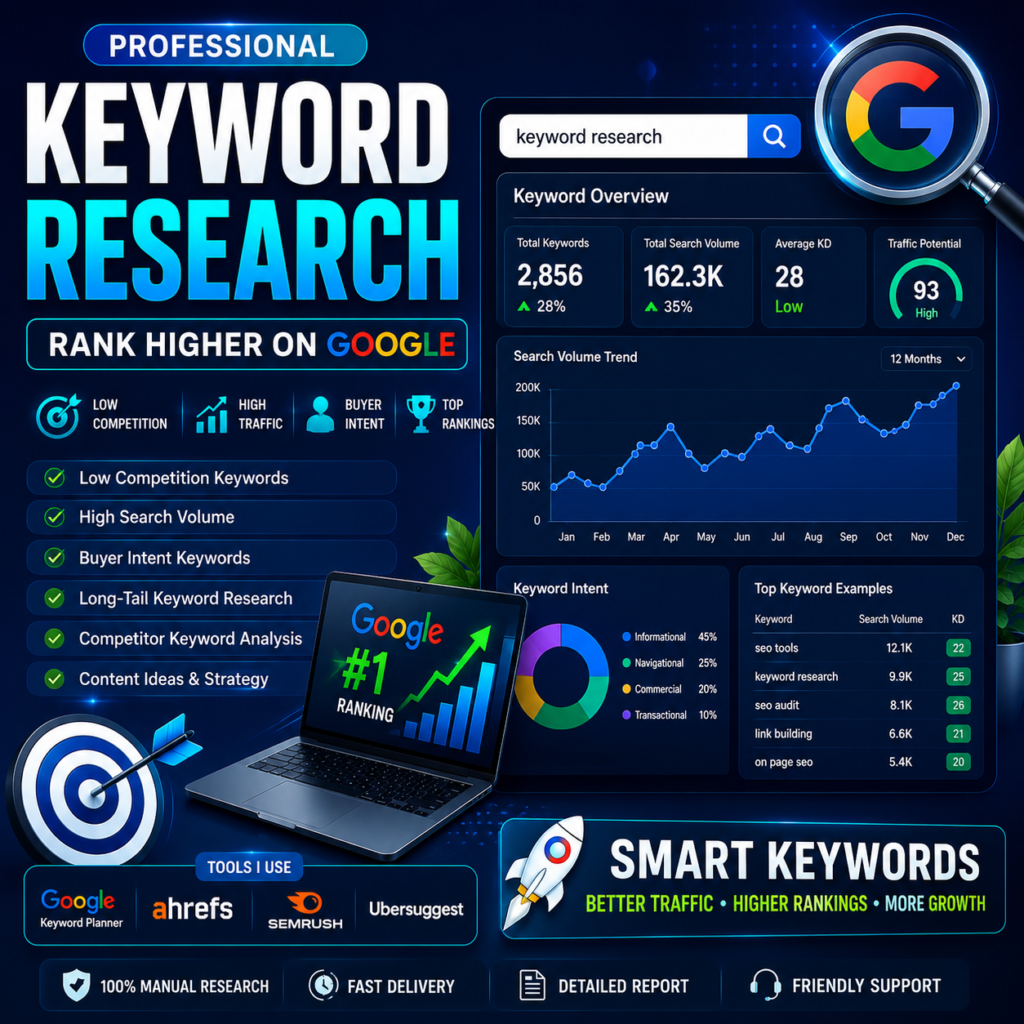
Keywords are not dead — they have evolved. Modern Google SEO focuses on intent clusters rather than individual terms. Map your content to four intent types: informational (how-to guides, explanations), navigational (brand searches), commercial (comparisons, reviews), and transactional (product/service pages). Each intent type requires a different format and call-to-action. Long-tail, conversational queries are growing fastest due to voice search and AI chat interfaces.
AEO + GEO + SEO: A Unified Strategy
The most future-proof approach is to treat SEO, AEO, and GEO as one integrated strategy. Create content that ranks on Google (SEO), directly answers specific questions (AEO), and is structured clearly enough for AI models to reference and quote (GEO). Use FAQ sections, structured data, short direct answers, original statistics, and strong author credibility signals. This triple-optimization approach ensures your content performs across traditional search, AI Overviews, and generative AI platforms simultaneously.
❓ What is the most important Google SEO factor in 2026?
Content quality aligned with search intent, backed by E-E-A-T signals (experience, expertise, authoritativeness, trust) and fast technical performance, is the most important combined factor.
❓ How long does Google SEO take to show results?
For new websites, expect 3–6 months for meaningful organic visibility. Established sites with good authority may see ranking improvements within 4–8 weeks of a content or technical update.
❓ Does Google SEO still work in the age of AI?
Yes. Google remains the world’s most-used search engine. AI Overviews pull from highly-ranked, trusted pages — making Google SEO the foundation of AI search visibility too.
Conclusion
Google SEO in 2026 is richer, more nuanced, and more impactful than ever. The websites that win are those that combine technical excellence, genuine expertise, and content crafted to be found by humans, AI Overviews, and generative search engines alike. Start with a strong SEO foundation, layer in AEO formatting for direct answers, and build for GEO to stay visible in the AI-powered search landscape ahead.