 Skip to content


How to protect digital privacy security in the age of AI ,Artificial Intelligence (AI) is transforming how we live, work, and interact. From personalized recommendations to smart surveillance, AI systems rely heavily on data—especially personal data. While these technologies offer convenience and innovation, they also pose significant risks to individual privacy
What Is Digital Privacy Security?
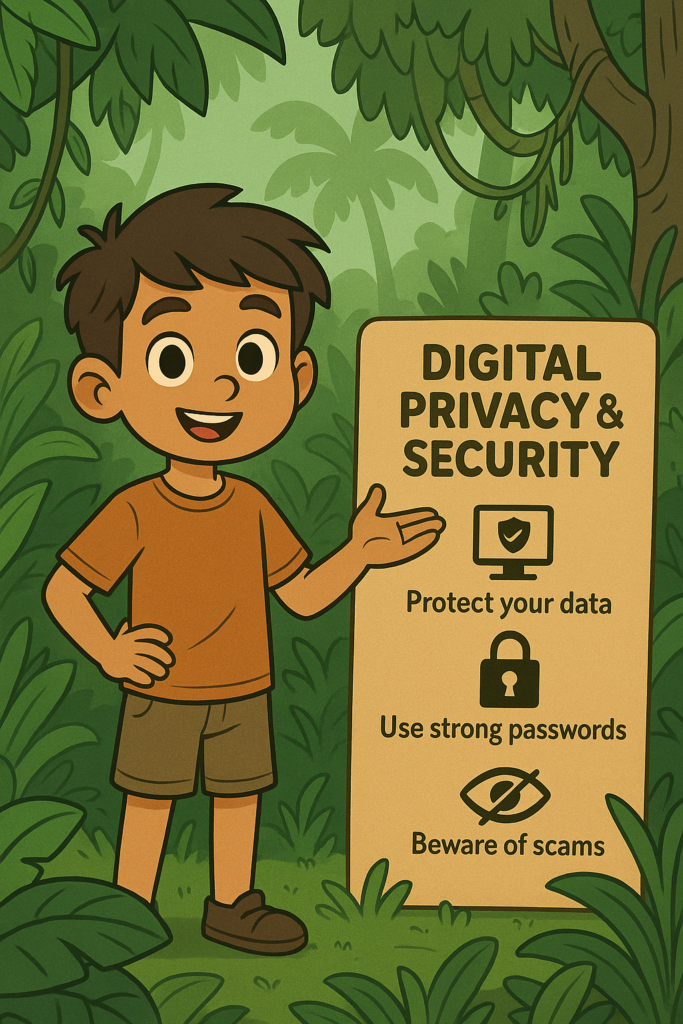
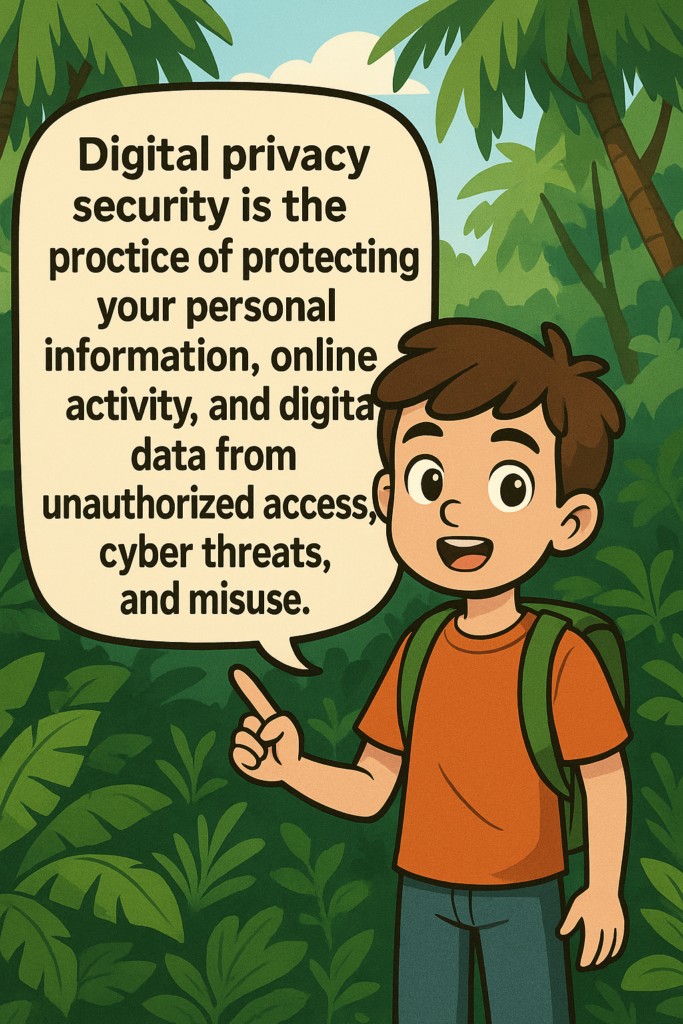
Digital privacy security is the practice of protecting your personal information, online activity, and digital data from unauthorized access, cyber threats, and misuse. In today’s connected world, individuals and businesses share sensitive information across websites, apps, and cloud platforms every day. Strong digital privacy security ensures that your data stays safe, your identity remains protected, and your online presence is secure from hackers, data breaches, and tracking technologies.
AI systems are inherently data-driven. This dependence on large volumes of data introduces several privacy risks:
- Mass Data Collection
AI often requires extensive datasets, which may include sensitive information like location, health, financial records, or even biometric data. - Profiling and Surveillance
AI can infer behaviors, preferences, or even emotions, leading to profiling and automated decision-making that can affect individuals without their knowledge. - Re-identification of Anonymized Data
Even anonymized data can be re-identified by AI through cross-referencing and pattern analysis. - Bias and Discrimination
If biased data is used to train AI models, it can lead to discriminatory outcomes, disproportionately affecting marginalized groups. - Lack of Transparency
Many AI models, especially deep learning algorithms, function as “black boxes,” making it difficult to understand or challenge their decisions.
Key Principles How to protect privacy in the age of AI
To safeguard privacy in the age of AI, certain principles should guide development and deployment:
- Data Minimization: Collect only the data necessary for a specific task.
- Informed Consent: Users must understand how their data will be used.
- Purpose Limitation: Data should be used only for the stated, agreed-upon purposes.
- Transparency and Explainability: Individuals should be able to understand how AI decisions are made.
- Right to Opt-Out: Users should have control over whether their data is used in AI systems.
Technological Safeguards
Developers and companies can implement technical methods to improve privacy:
- Differential Privacy: Adds statistical noise to data to prevent re-identification.
- Federated Learning: Trains AI models across decentralized devices without sharing raw data.
- Encryption & Secure Computation: Ensures data is protected both in transit and during analysis.
Legal and Ethical Frameworks
Governments and regulatory bodies are developing frameworks to govern AI and protect privacy:
- GDPR (Europe): The General Data Protection Regulation includes rules on automated decision-making and profiling.
- AI Act (EU): Aims to regulate high-risk AI systems with specific requirements on transparency, data governance, and human oversight.
- OECD and UNESCO Guidelines: Encourage responsible, human-centric AI development globally.
The Role of Organizations and Developers
- Ethical AI Development: Build privacy into the design phase (“privacy by design”).
- AI Audits and Accountability: Regular audits and clear accountability can detect and correct issues early.
- Public Awareness: Educating users about AI and data privacy empowers them to make informed decisions.
Conclusion
Digital privacy security is no longer optional in the modern digital world — it’s a necessity. As cyber threats continue to grow, protecting your personal and business data helps prevent identity theft, financial loss, and privacy violations. By using strong passwords, secure networks, encryption, and smart online habits, you can stay safe and maintain full control of your digital life.
✅ FAQs – Digital Privacy Security
1. What is digital privacy security?
Digital privacy security is the protection of your personal data and online activity from unauthorized access, hacking, and misuse.
2. Why is digital privacy security important?
It prevents data breaches, identity theft, financial fraud, and unauthorized tracking of your online behavior.
3. How can I improve my digital privacy security?
Use strong passwords, enable two-factor authentication, update your software regularly, and avoid sharing sensitive information online.
4. What are the biggest threats to digital privacy?
Major threats include phishing attacks, malware, insecure public Wi-Fi, data breaches, and tracking technologies.
5. Does digital privacy security apply to businesses too?
Yes. Businesses must protect customer data, secure payment systems, and use strong cybersecurity practices to avoid legal and financial risks.


